

Ch. 17 · Origin · Illinois
Illinois to North Texas: taxes, basements, and build timing
The state income tax disappears, the property-tax rate drops, the basement disappears, and the utility year flips from heating to cooling.
More than 23,500 people moved from Illinois to Texas in the latest 2024 reporting period, per Census Bureau data, one of the largest state-to-state flows into Texas. For Illinoisans the move pairs a familiar tax headline with an unfamiliar set of household details: the income tax that ends, the property tax that softens, the basement that does not exist, and a utility year that runs on cooling instead of heating.
This chapter works each change in order, with the tax figures sourced and the new-construction timing explained in the context of chapters 1 and 6. No number here is invented; where a comparison depends on your home value and income, this page says to run it with your own figures.
Side by side
Illinois vs. North Texas at a Glance
The five changes that follow you across state lines, pulled straight from this chapter.
Income tax
Illinois has a state income tax.
Income tax
Texas has no state income tax.
Property taxes
Among the highest effective property tax rates in the country, with rates set locally.
Property taxes
Texas funds local services from property taxes too, and there is no income tax.
Foundations & basements
Basements are common in Illinois because of frost depth.
Foundations & basements
Most Texas homes are built slab-on-grade on expansive clay, so basements are rare.
Weather
Cold winters and a heating-heavy utility year.
Weather
Hot summers and a cooling-heavy utility year.
Housing
Existing single-family housing stock is common.
Housing
New-construction communities dominate.
Part of the Where you're coming from hub. California, Florida, New York, Colorado, Illinois, corporate relocation, and military & veterans each have their own chapter.
First impressions
What Illinois Buyers Notice First
Four things that look different once you land in North Texas. Jump to the section of this chapter that explains each one.
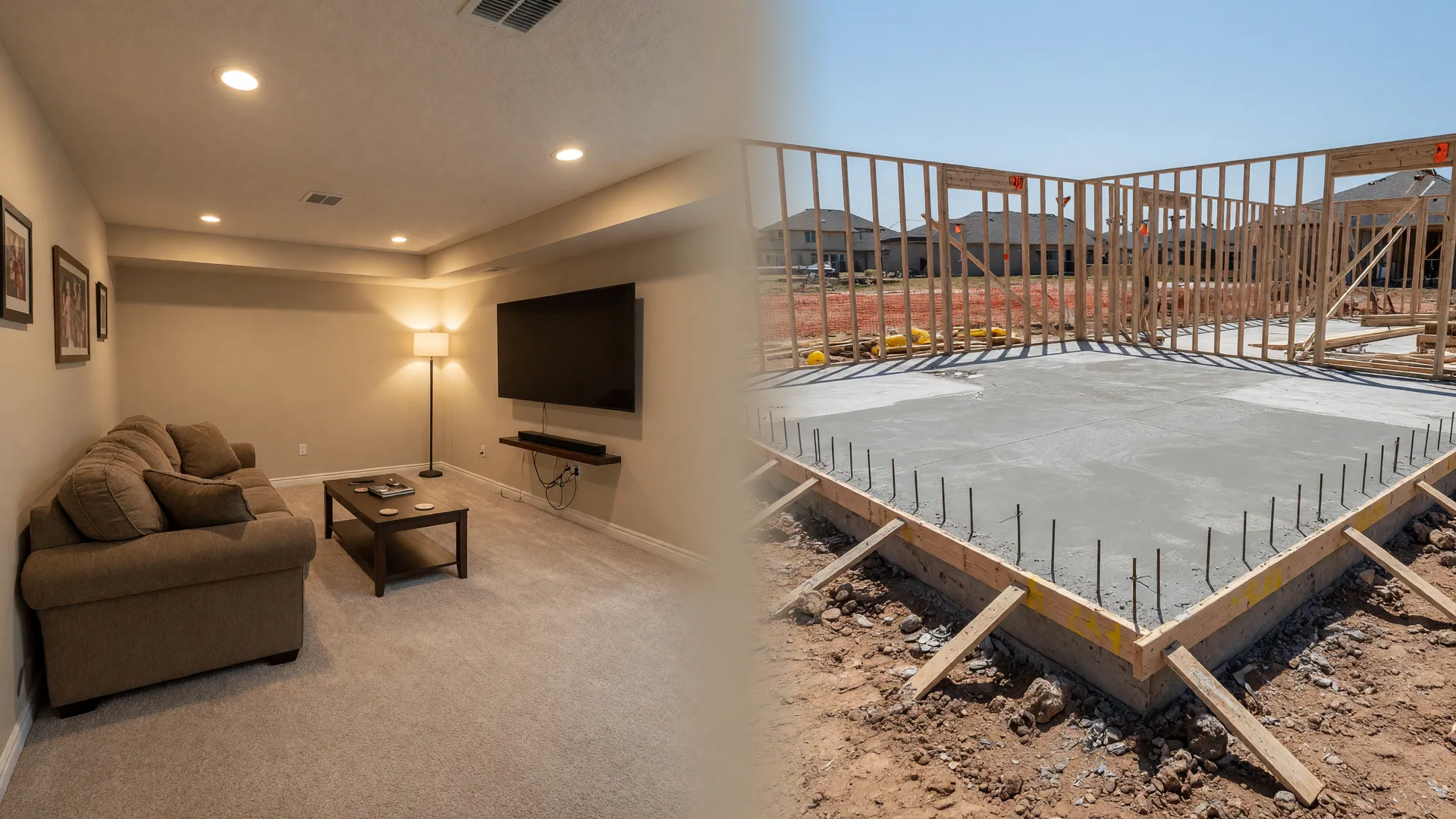
Basements vs. Slab Foundations
Why basements are rare on Texas soil, and what slab construction means for storage and foundation care.
Read the section
New-Construction Communities
How the 60 to 90 day timeline and quick-move-in inventory work for an Illinois move.
Read the section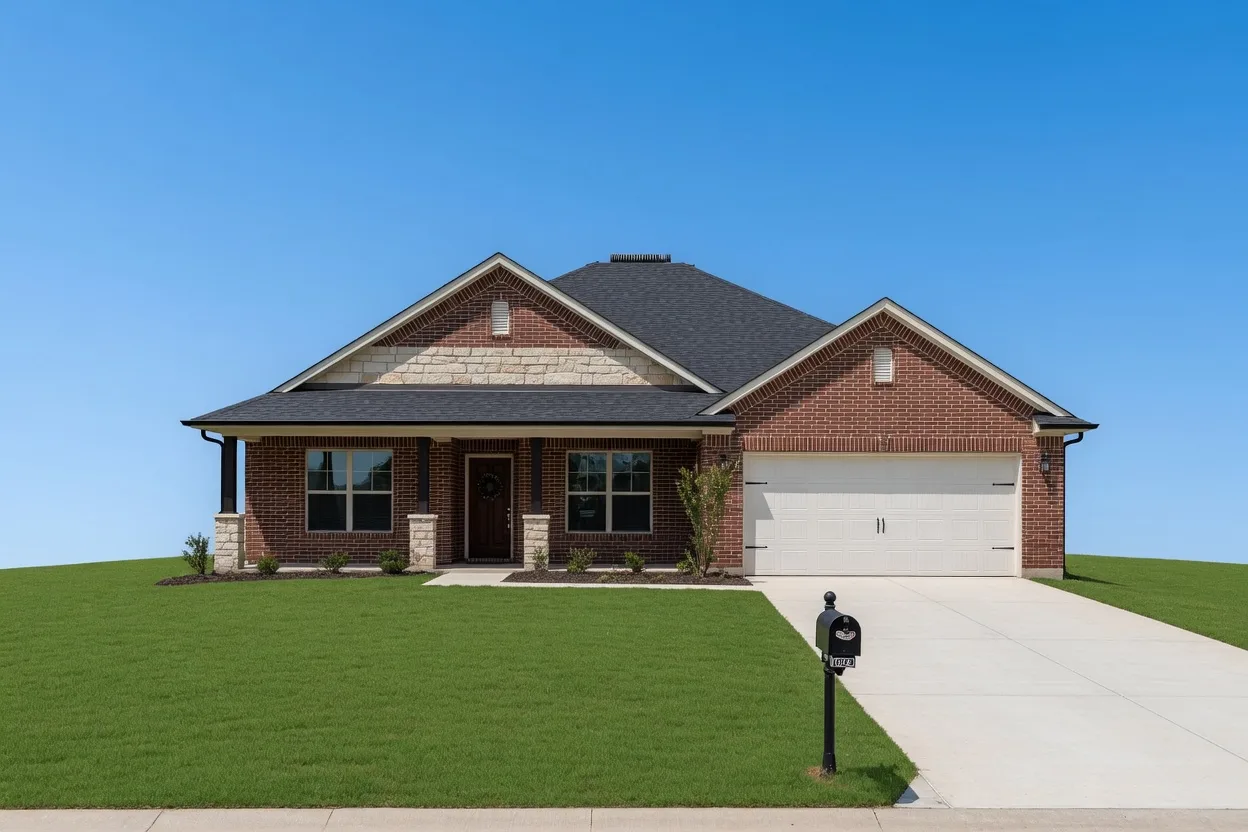
Property Tax Differences
From a flat income tax to no income tax, and how the property-tax bill is structured here.
Read the section
Weather and Outdoor Living
A utility year that runs on cooling instead of heating, and what that changes at home.
Read the sectionIncome tax gone, property tax softer
Illinois taxes individual income at a flat 4.95 percent and carries some of the highest property taxes in the country, around 1.9 percent of value by recent Tax Foundation measures, the second-highest of any state. Texas has no individual income tax and property taxes around 1.4 to 1.5 percent of value, with the residence homestead exemption and the 10 percent annual cap trimming the effective rate on your primary home (chapter 7). The Illinois mover usually picks up real money from the tax swap alone, but the property tax on a new build still needs budgeting, because year one assesses at full value as of January 1 (chapter 6), before the exemption and cap take effect.
No basement: slab and clay, and what you give up
Illinois houses are built for frost and basements, with a crawlspace or slab appearing mostly in newer construction. North Texas new construction is slab-on-grade on expansive clay, because the ground does not freeze deeply and the soil moves with moisture instead. You give up the basement's storage and utility space, and you gain foundation care: soaker hoses through dry spells, drainage kept away from the slab, and an honest read on hairline cracks, which appear in well-built homes too (chapter 8). Plan the storage question before you sign, because the square footage you are buying above grade is all the square footage you get.
The utility year flips from heating to cooling
In Illinois the utility year runs on winter heating; in North Texas it runs on summer cooling. Expect the heating bill to shrink to a rounding error and the summer electric bill to become the annual line item, with spring and fall as the cheap months in between. The practical versions of this: check the air conditioning tonnage and insulation on the plan, prefer west-facing glass that you can shade, and time the move for spring rather than July if you have any choice. It is the same annual cost, a different season.
New-construction timing for an Illinois move
If you are moving on a school calendar or a lease cycle, the 60 to 90 day master plan in chapter 1 applies, with two Texas-specific clocks: the January 1 assessment (chapter 6) and the spring severe-weather season. A home that closes before June avoids the worst of the hail months and gives you a full summer to establish the lawn and the soaker-hose habit before next year's heat. When the calendar is fixed and short, builders' quick-move-in inventory is the fastest path, and chapter 2's remote protocol covers buying before you physically arrive, which many Illinois movers scheduling a July lease end do.
On InDFWLiving
Explore North Texas Communities
Community discovery lives on InDFWLiving, where you can compare cities and neighborhoods you can actually tour.

Northlake
A growing town on the southwest edge of Denton County, near I-35W and Highway 114, with new-construction master-planned communities.
City guide
Argyle
A semi-rural Denton County town along the I-35W corridor, where new master-planned communities sit beside country-estate homes.
City guide
Justin
A small Denton County town at FM 407 and FM 156 where new-construction communities are reshaping the outer-ring suburbs.
City guideSources
Material factual claims in this chapter link to the sources below. Market figures are reported conditions, not guarantees; verify current offers in writing.

Written by
Theresa De La Rosa
Founder and broker of In DFW Living Group, the real estate group brand of Covenant Heritage Realty, LLC. TX #807294 · 18+ years in Texas and Florida real estate.
Next in the process
Ready to buy before you move?
Book the consult. Then pick the area.
This guide is the process, not the listings. When you are ready to apply it to your specific move, book a consultation with Theresa De La Rosa, Broker at Covenant Heritage Realty. For the which-DFW-area-fits question, the community and city guides live at indfwliving.com.