
Ch. 12 · Origin · Where You're Coming From
Moving to North Texas? Start Here.
Choose where you're moving from to learn what changes when buying a new-construction home in North Texas.

One chapter per origin
Where Are You Moving From?
Every state brings its own money math, climate assumptions, and closing habits to a North Texas new build. Pick your origin to see the details that actually change when you cross into Texas.

Ch. 13 · Origin
California
Prop 13 vs. Texas' January 1 assessment system, MUD and PID districts, and the equity-unlock story.
Explore Guide
Ch. 14 · Origin
Florida
No income tax in either state, so insurance, homestead rules, and the buying process carry the change.
Explore Guide
Ch. 15 · Origin
New York
State and local income tax ends at the Texas line; here is the property-tax tradeoff and transfer timing.
Explore Guide
Ch. 16 · Origin
Colorado
Mountain to prairie: hail habits, wells vs. municipal water, and the corporate-transferee timeline.
Explore Guide
Ch. 17 · Origin
Illinois
Income tax gone, a lower property-tax rate, no basement, and a utility year that runs on cooling.
Explore Guide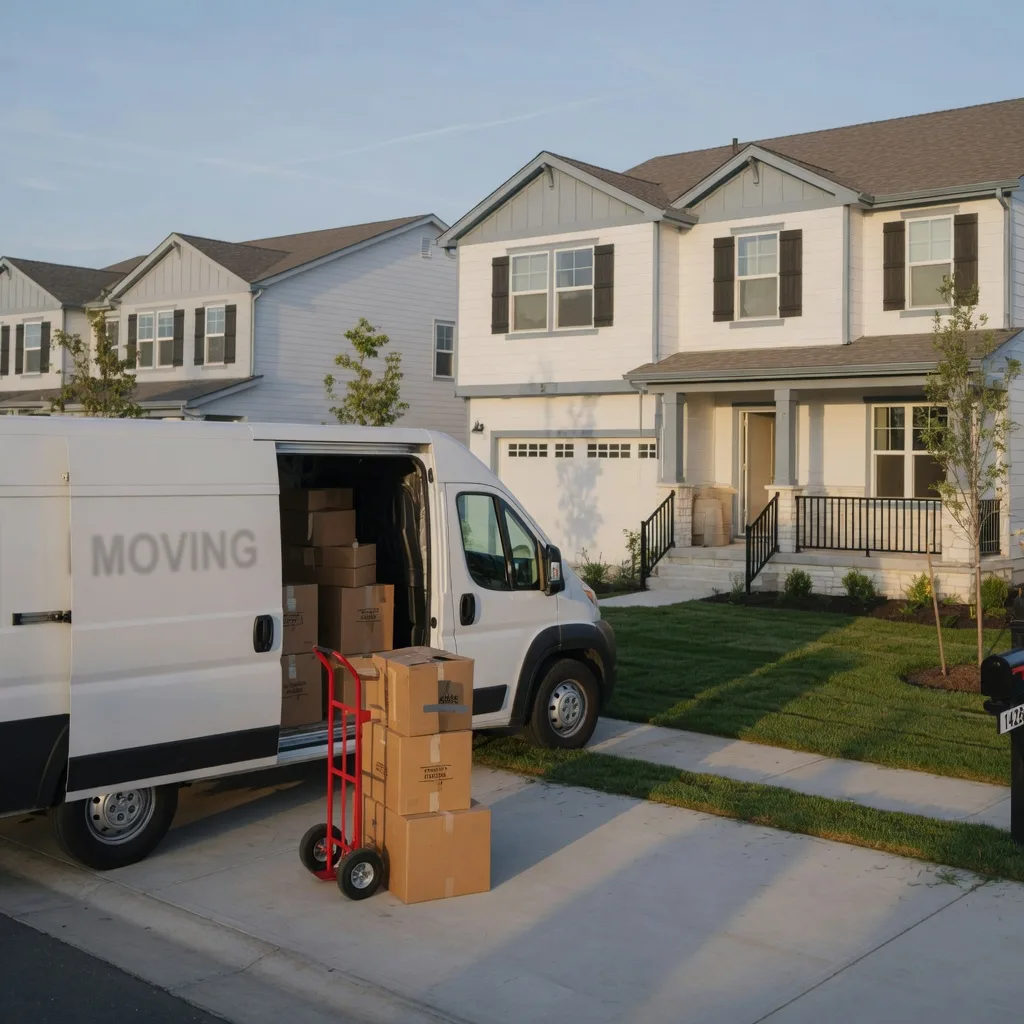
Ch. 18 · Origin
Corporate Relocation
Buying with a hard start date: the buy-before-you-arrive plan for DFW employees.
Explore Guide
Ch. 19 · Origin
Military & Veterans
The VA funding fee, the 60-day occupancy rule, and lining up PCS dates with completion.
Explore GuideEducational note · A story the broker recently heard
Before You Choose a Homesite: What Buyers Often Overlook
A buyer relocating from California to North Texas built a new home without using a real estate agent and never researched the zoning or the future land use around the lot he chose. A church is now being built on the land behind the home, and the premium lot he picked has become much harder to resell.
This is a story the broker recently heard, retold here only in general terms: no name, no community, no builder, no city, no exact location. It is not a statistic and it is not a client case.
- The builder's on-site sales representative works for the builder, not for the buyer. Nothing in that arrangement asks anyone to check the land behind the lot.
- Zoning, surrounding land use, and future development matter as much as the house itself, and they must be checked before a lot is chosen, not discovered after move-in.
- An agent who specializes in relocation and new construction verifies zoning, future development, MUD and PID districts, taxes, and schools before you sign. Those are the very things this buyer never checked.
The house is only part of the decision. Zoning, future land use, districts, taxes, and schools are the parts you cannot see from the floor plan, and they are the parts a relocation specialist checks before you sign.
Not every agent performs every verification, and no professional can guarantee future land use. Treat this as education, not a promise.
This is the hub for buyers relocating to North Texas: one chapter per origin, written for the details that actually change when you cross into Texas. Read your origin chapter first, then the process chapters it points to.
How to use this hub
Your origin chapter assumes you understand the 60 to 90 day timeline (chapter 1) and the remote buying protocol (chapter 2). It fills in what is different about where you start: which numbers change, which documents are unfamiliar, and which deadline matters most for your kind of move. Every origin chapter ends with the same two doors, booking a consultation with Theresa, or heading to indfwliving.com for the community and city guides that answer which DFW area fits. If your purchase sits at the luxury tier, chapter 20, luxury new construction in North Texas, is the entry point for that end of the market: custom plans, construction financing, allowances and change orders, and the tax and contract details that differ from a production build.
The common threads, no matter where you start
Five things change for every out-of-state mover, and each has a chapter of its own. The property tax system runs on a January 1 appraisal snapshot (chapter 6), the homestead exemption and the 10 percent cap (chapter 7), a builder's contract instead of the resale form you may know (chapter 5), earnest money held by the title company with staged deposits (chapter 4), and a slab foundation on expansive clay (chapter 8). The origin chapters flag which of these hits your home state the hardest.
Not from one of these states?
If your origin state is not covered below, chapter 10's California, Florida, or within Texas comparison plus the process chapters still give you the full mechanics. The origin-specific content that matters most, the income tax comparison, the property tax system, and the buying process, is the same machinery for every state; the chapters below just show you which details differ.
Sources
Material factual claims in this chapter link to the sources below. Market figures are reported conditions, not guarantees; verify current offers in writing.

Written by
Theresa De La Rosa, Broker
Founder and broker of the In DFW Living Group brand of Covenant Heritage Realty, LLC. TX #807294 · 18+ years in Texas and Florida real estate.

Next steps
Two doors from here
Your origin chapter answered what changes when you cross into Texas. These two doors move you forward.
Explore North Texas Cities & Communities
The community and city guides that answer which DFW area fits your budget, commute, and schools live on InDFWLiving.com.
Explore area guidesDiscuss Your Relocation
Book a consultation with Theresa De La Rosa, Broker at Covenant Heritage Realty, about your specific move, timing, and new build.
Book a consultationTheresa De La Rosa · Broker, Covenant Heritage Realty, LLC · TX #807294 · 940-240-3800